








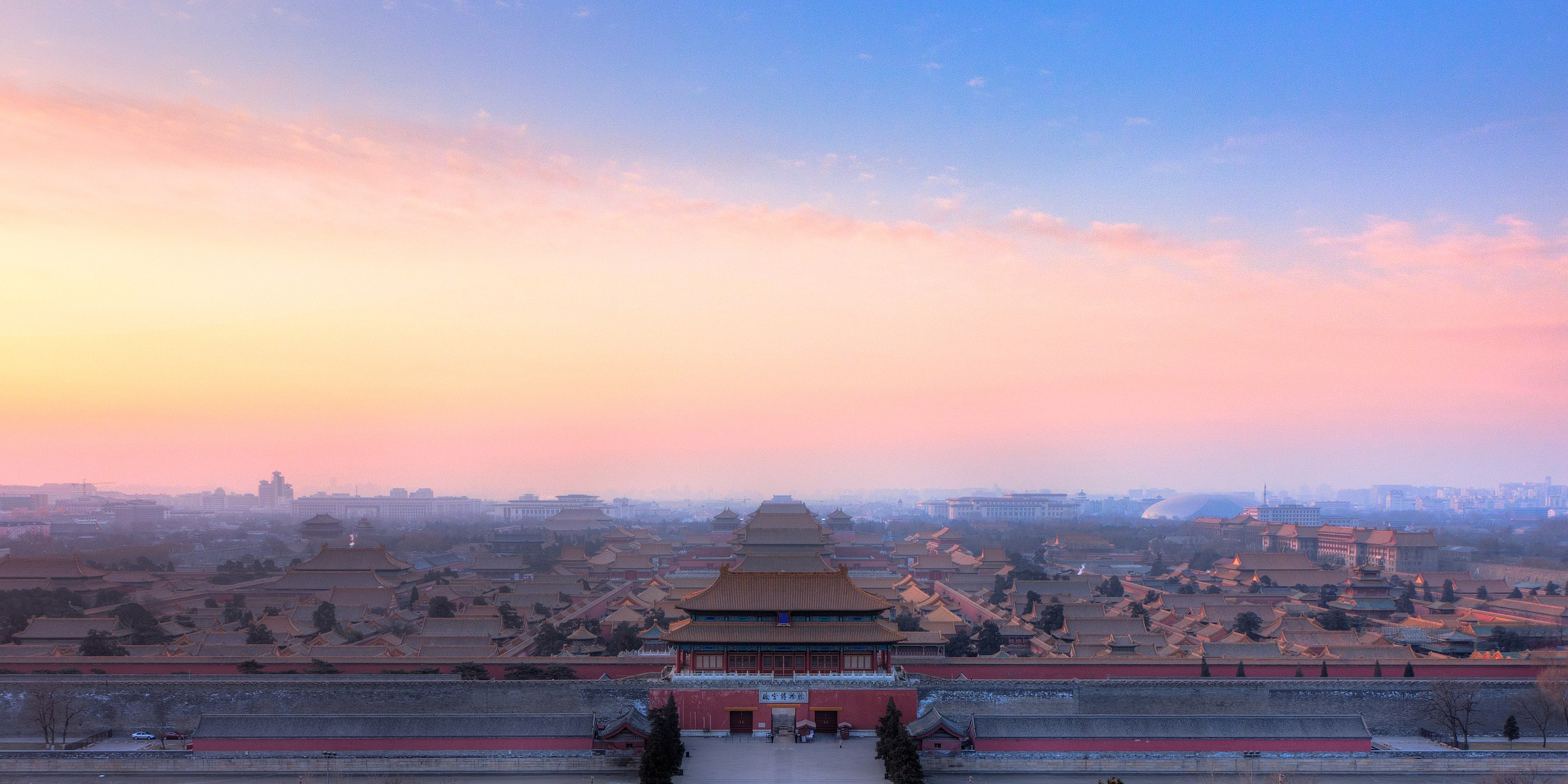
Fictional locations featured in the show are based on the architecture and designs of real locations. For example, the creators modeled the city of Ba Sing Se off the Forbidden City in China.
The series is notable for borrowing extensively from East Asian art and mythology for its universe. Its creators employed cultural consultants Edwin Zane and calligrapher Siu-Leung Lee to help determine its art direction and settings. Its character designs are influenced by Chinese art and history, Hinduism, Taoism and Buddhism, and Yoga. Jeremy Zuckerman and Benjamin Wynn composed the series' music and sound; they experimented with a wide range of instruments, including the guzheng, pipa, and duduk, to match the show's Asia-influenced setting. The art style of the fictitious locations used in the series are based on real locations in Asia. Sites such as the Forbidden City and the Great Wall of China in Beijing were inspirations for the Earth Kingdom city of Ba Sing Se, and Water Tribe locations were based on Inuit and Sireniki cultures. According to writer Aaron Ehasz, early Fire Nation designs were based on Japanese culture. To avoid accidentally making broad statements, they redesigned many settings and peoples to be more "broadly inspired". For the final design, the creators went with a more Chinese style for the Fire Nation's clothing and architecture. For instance, the Fire Temple was based on the Yellow Crane Tower, as its flame-like architectural elements were a perfect motif for the Fire Nation architecture according to the creators.
The fighting styles employed by the show's characters are derived from Chinese martial arts, for which the film-makers employed Sifu Kisu of the Harmonious Fist Chinese Athletic Association as a consultant. Each fighting style is unique to the "benders" who use them or characters who are aligned to a certain element. For example, practitioners of "waterbending" use movements influenced by T'ai chi and focused on alignment, body structure, breath, and visualization. Hung Gar was the inspiration for practitioners of "earthbending", and was chosen for its firmly rooted stances and powerful strikes as a representation of the solidity of earth. Northern Shaolin, which uses strong arm and leg movements, was chosen to represent "firebending". Ba Gua, which uses dynamic circular movements and quick directional changes, was used for "airbending". The Chu Gar Southern Praying Mantis style can be seen practiced by the earthbender Toph, who develops a unique fighting style as a result of her blindness. Asian cinema influenced the presentation of these martial-art bending moves.